
Understand the site.
Review interval demand, tariffs, generation, constraints, critical loads and the desired operating outcome.
Each stage reduces uncertainty before the next commitment, so capital decisions are made with engineering evidence behind them.
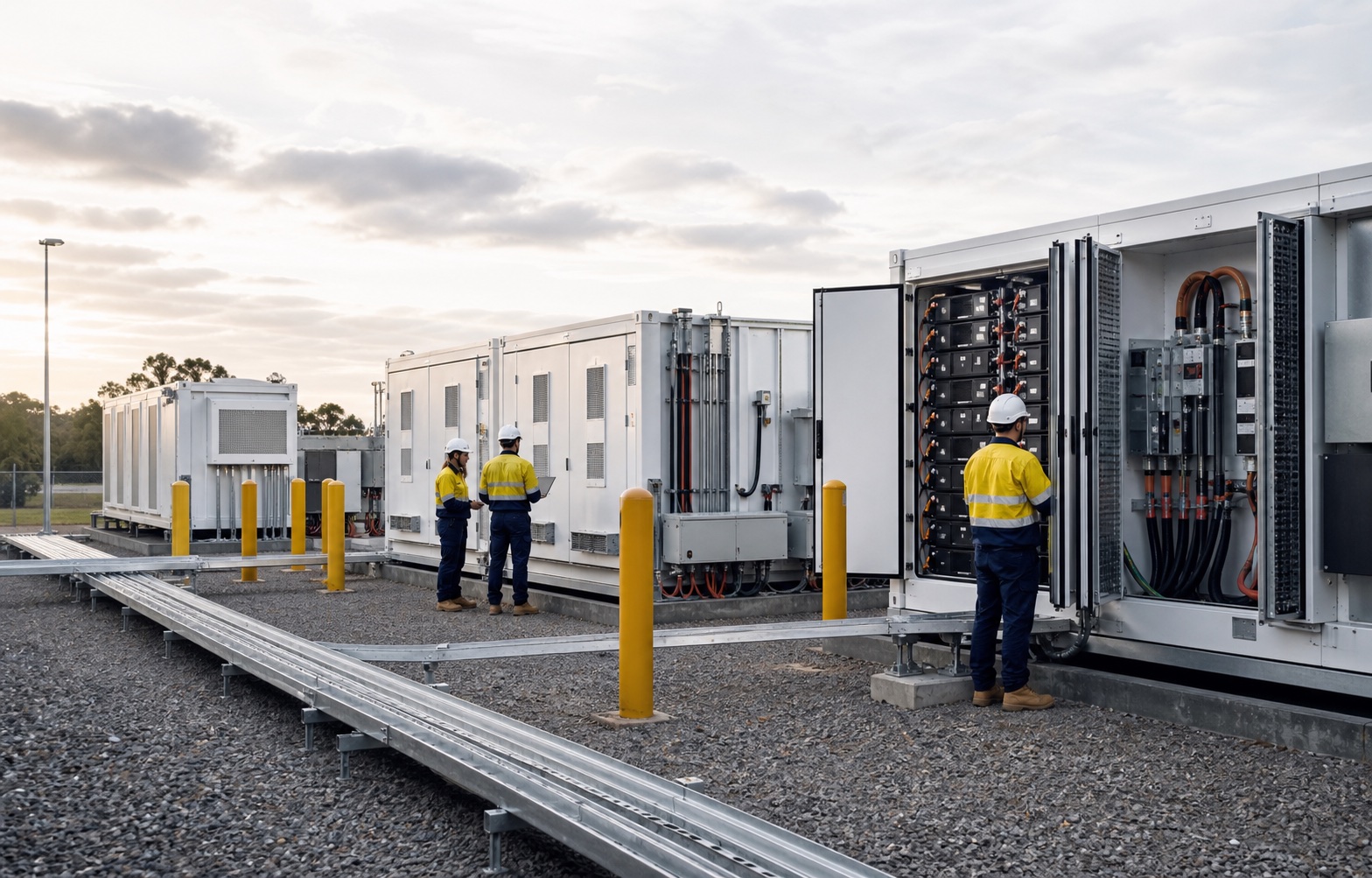
A credible storage project is built through a sequence of technical and commercial decisions. Each stage reduces uncertainty before the next commitment.
Review interval demand, tariffs, generation, constraints, critical loads and the desired operating outcome.
Develop an indicative power, duration, architecture and operating strategy around the strongest use case.
Coordinate detailed design, supply, installation, controls integration, testing and commissioning.
Monitor system health and review dispatch performance as site conditions and energy opportunities evolve.
Clear early questions help avoid an oversized system, a weak use case or an operating strategy that does not match the site.
The design should reflect interval demand, renewable generation, tariff structure, connection constraints, critical loads and the intended operating outcome. The largest system is not automatically the most valuable one.
Often, yes. The preferred arrangement depends on the existing inverter architecture, switchboard capacity, connection agreement and the way storage is expected to operate.
Recent interval consumption data, electricity bills, generation data, site plans, major operational loads and the organisation’s main objective provide a useful starting point.
Yes. Monitoring and periodic review help maintain system availability and keep the dispatch strategy aligned with changing site demand, tariffs and operating priorities.